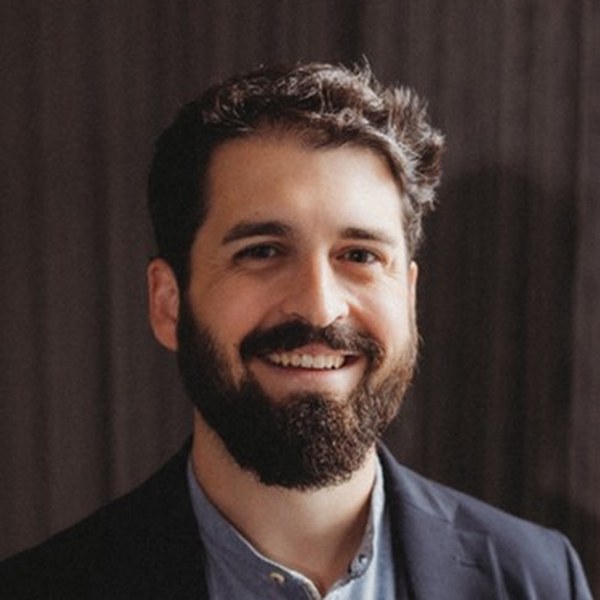
Gregg A. Castellucci, PhD
Principal Investigator · Assistant Professor, Brain & Cognitive Sciences
Postdoc, NYU
PhD, Yale University (Linguistics & Neuroscience)
BS, University at Albany, State University of New York
Home
We study how human and animal brains coordinate vocalization, gesture, and other nonvocal movements into fluent multi-effector behaviors.

Research
Speech is almost always accompanied by gestures of the hands, face, head, torso, etc. These co-speech gestures aren’t just “fidgets” or probabilistic “add-ons” to spoken language – instead, they are semantically linked with what’s being said and coupled at a kinematic level with speech articulation itself. We also gesture when our conversational partners can’t see us, and people born blind gesture when they’re speaking. This all points to gesture being fundamentally entangled with the cognitive and motor pathways that govern language…but how does that actually work in the human mind and brain?
Research in the lab tackles this question in an integrative fashion, and we use neural and behavioral approaches to investigate the biological basis of multimodal communication (i.e., simultaneous speech/vocalization and gesture). Our research is primarily focused on production, and our experiments seek to understand how humans go about planning speech and gesture at the same time and how our motor systems coordinate the multiple effectors (i.e., body parts) that constitute these behaviors – and what happens when these processes are disrupted.
While multimodal signalling is a key feature of human communication, it is not unique to us; instead, multi-effector displays consisting of vocalization and ‘gestural’ actions have independently evolved in many species. By examining these nonhuman behaviors, our lab seeks to gain a holistic view of human communication – what features set it apart from other species, what evolutionary pressures shaped our social systems, and what generalizable neural and behavioral algorithms exist for coordinating vocalization and nonvocal movements into coherent communicative acts.
Us!
The lab’s first line of research aims to understand how the human brain produces speech and gesture – often simultaneously – and we investigate this topic using a combination of intracranial recordings and perturbations (e.g., electrocorticography, direct electrical stimulation), targeted psycholinguistic experiments, and high-precision motion tracking. With the detailed neural and behavioral data resulting from this multi-scale approach, we are currently pursuing a number of foundational questions, such as: What are the brain areas underlying gesture and nonverbal communication? How do these areas interact with the language system during speech production? What’s ‘special’ about speech and gesture versus other multi-effector actions?


Other species
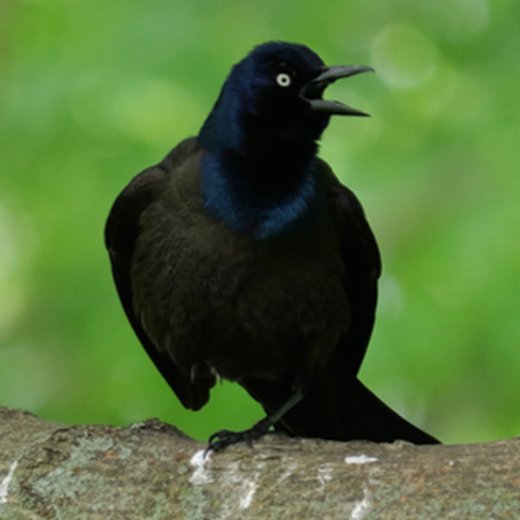
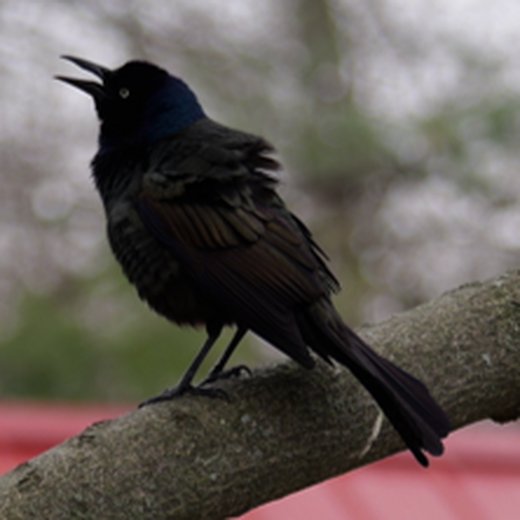
Our second line of research aims to understand how the brains of other species have evolved to support multimodal communication. This work centers on New World blackbirds (‘icterids’, including cowbirds and grackles) – a family of songbirds that possess an extensive repertoire of vocalizations, nonvocal signals, and multimodal displays – and we collaborate with other labs to assess the communication systems of other avian and mammalian species. Our current studies focus on the behavioral and kinematic principles of various multimodal displays, with the goal of characterizing the different motor strategies that organisms (including humans) use to coordinate vocal and ‘gestural’ actions. These investigations also make predictions about the neural pathways underlying multi-effector displays, which we can directly test with electrophysiological recordings and perturbation experiments.
People
We are an interdisciplinary team of researchers using insights and approaches from linguistics, neuroscience, and ethology to investigate the biological basis of multimodal communication.
Our lab is affiliated with the Department of Brain and Cognitive Sciences, the Del Monte Institute for Neuroscience, and the Center for Language Sciences at the University of Rochester.
Principal Investigator · Assistant Professor, Brain & Cognitive Sciences
Postdoc, NYU
PhD, Yale University (Linguistics & Neuroscience)
BS, University at Albany, State University of New York

Postdoctoral Fellow
PhD, University of the Chinese Academy of Sciences (Cognitive Neuroscience)
What is the neural basis of coordinated speech and gesture production?
bliang8(at)bcs(dot)rochester(dot)edu
Research Technician
BA, University of Delaware (Linguistics)
How do humans plan speech and gesture at the same time?
wdych(at)bcs(dot)rochester(dot)edu
Graduate Student · Incoming Jan 2027
BA, University of Oregon (Linguistics)
How does co-speech gesture relate to other multi-effector behaviors?
alindon(at)ur(dot)rochester(dot)edu
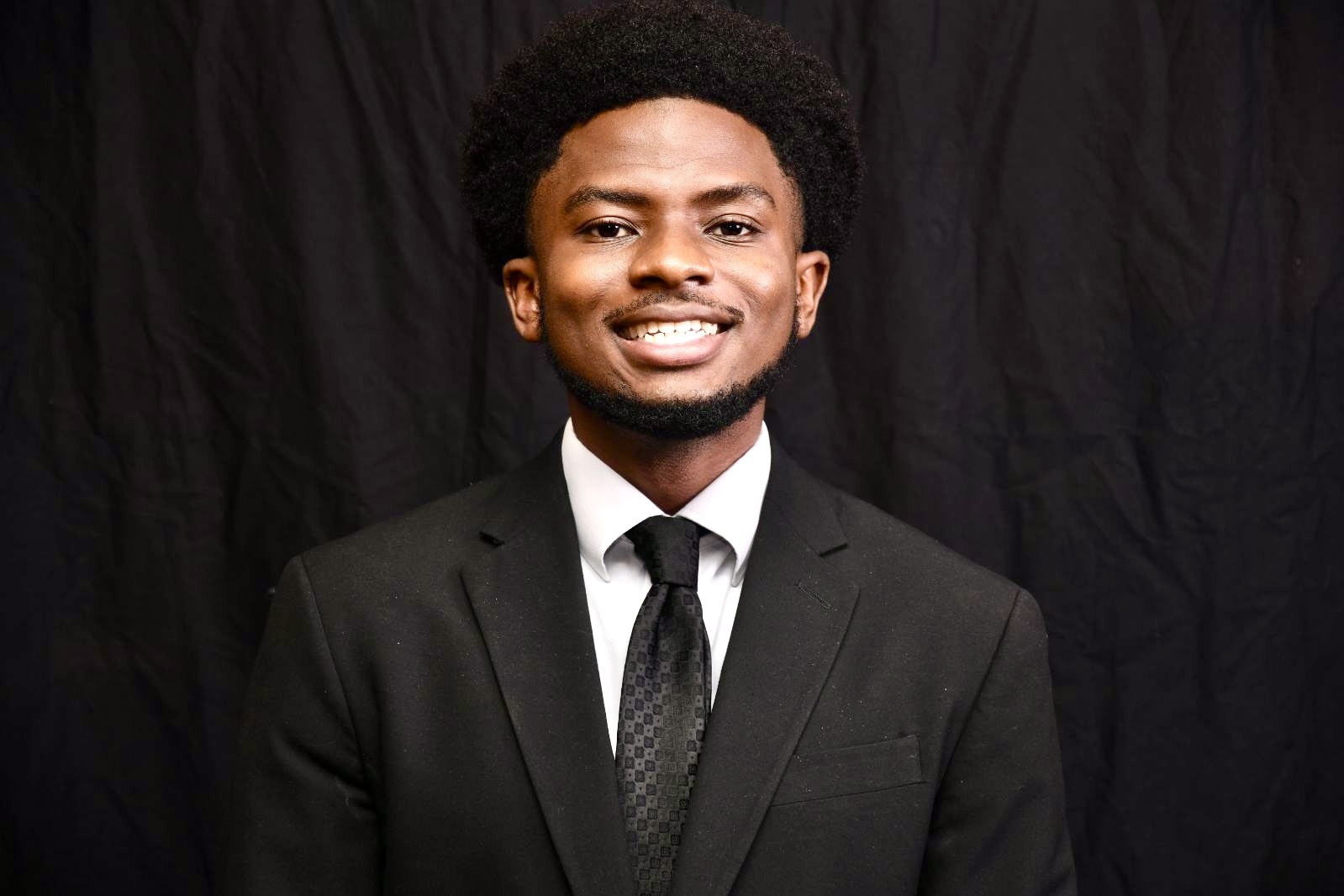
Graduate Student · University of Pennsylvania
BS, UMBC (Biological Sciences)
What is the neural basis of multimodal displays in the brown-headed cowbird?
Co-mentored with Marc Schmidt.
D'juan(dot)Moreland(at)pennmedicine(dot)upenn(dot)edu
Graduate Student
BS, Cornell University (Neurobiology and Behavior)
What strategies are used by different species to coordinate vocal and gesture movements?
gtsimis(at)ur(dot)rochester(dot)edu
Undergraduate Researcher
What evolutionary pressures lead to multimodal signalling in New World blackbirds?
zwang224(at)u(dot)rochester(dot)edu
Collaborators
Alumni
Publications
See the full list on Google Scholar →
News
August 3, 2026
D.A. Moreland. "Coordination of Song and Dance in a Songbird."
June 5, 2026
M. MacKay, F. Tabasi, J.D.W. Greenlee, G.A. Castellucci. "Neural representation of coordinated speech and gesture."
D.A. Moreland, C.I. Bardjis, M.F. Schmidt, G.A. Castellucci. "Quantifying vocal-postural coupling during display in the cowbird."
April 22, 2026
G.A. Castellucci. "What can multimodal communication tell us about motor coordination?"